Loading Jobs...

What is Homecare
Home care services is when care and support is provided in the comfort of your own home and surroundings. In your home throughout the day, you are use to your own familiar surroundings and are used to interacting with people that you love. There will be a time when extra care and support is required which is why we offer home care in the comfort of your own home. With home care, there is much more flexibility, whether you need extra care and support for a few hours or live-in care. Home care is a financial saving, compared to care provided in care and residential homes.

Here at Secure Healthcare Solutions. We provide quality home care designed to deliver domiciliary care, specialist home care, and complex care to the elderly, adults, and children. We are governed by the CQC, with a rating of good, and we work with service users, families and friends, local authorities, social services, and cases managers to create tailored personal home care plans, so we can provide quality care to ensure our service users have a quality of life.

Our home care services are provided by our trained and qualified care team and we have a trained and qualified in-house healthcare team to ensure we provide quality care.

There are different types of home care, depending on the needs of the individual requiring care.

Personal care
This when extra care and support is required to assist with daily tasks throughout the day, which may be because of an illness or for an elderly individual.

Examples of personal care include:

  • Assisting with washing and dressing
  • Support with getting patients in and out of bed
  • Help with going to the toilet
  • Preparing daily meals
  • Talking to the patient and providing the patient company
  • Support with household tasks
  • Helping patients get around the house
  • Administering basic medicines

Companionship care
Companionship care is generally for the older generation who are lonely or at risk of becoming lonely. These individuals are healthy to live in the comfort of their own home, however require some company to not feel lonely to stay happy and mentally strong. Loneliness is a huge issue that impacts a lot of people in life and it is important to have somebody to talk to to build an individual’s confidence, ensure social involvement and avoid or ease depression.

Dementia care
According to Alzheimer’s Research UK, there is over 850,000 people in the UK with dementia, which is likely to increase by one million by 2025. There is no cure for dementia yet and looking after a loved one requiring dementia care full time can be difficult for a family member, alongside other commitments. Individuals with dementia are likely to have challenging behavior which is unpredictable throughout the day. For example, individuals with dementia may get confused, have angry outbursts and forget daily tasks on a regular basis. With an individual that has dementia, changing routine and the environment will be challenging which is why home care is much more beneficial than residential care, as loved ones are used to the place they know.
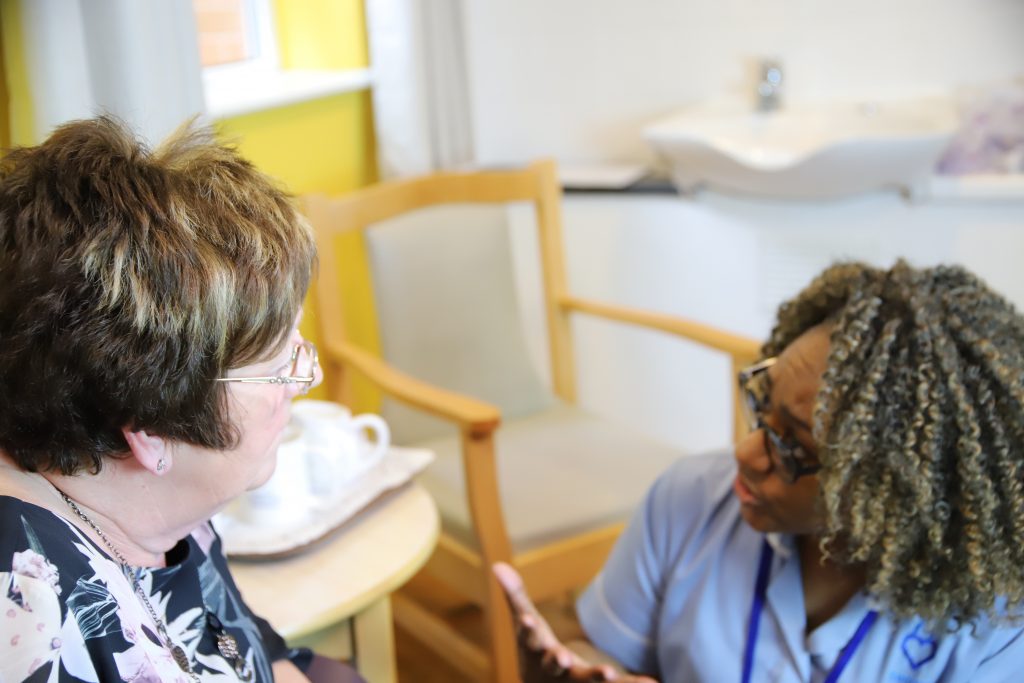
Home Care
Home Care

Live-in care
Live-in care is having the reassurance of 24-hour care when a professional carer lives in the home of the individual provided care and support for. Generally, live-in care will be for individuals that have a long-term condition that requires full-time care and support. It could also be to cover a family carer that is having a break. It is a great avenue for those that need daily care and companionship, which allows you to live in the comfort of your own home, have a routine, and develop a strong relationship with the carers.

Respite home care
Respite home care is a short-term care service. This could be to support somebody who cares for a loved one and it could be daily or weekly to help the family carer that has other commitments. It may be for a short period of time, while the family carer is on holiday or it could be to provide extra help when a patient has been discharged from hospital to help the individual recover, as the individual could struggle with movement, have difficulty performing daily tasks and taking medications or injections while recovering.

Nursing care
Although care workers are trained to do medical tasks and administer a lot of medications and wounds, there will be medical tasks that need to be carried out by a qualified nurse which requires nurses’ training and experience. A nurse could be required to care and support for those that have the effects of a stroke, Huntington’s disease, brain or spinal injury, muscular dystrophy, motor neuron disease, cancer care, surgical procedures, tracheostomy care, stoma care, and catheter care, which requires specialist training. Nurses could also be dressing wounds, treating and managing skin problems, and administering injections and some types of medications.

Whether you or your loved ones require home care full-time or part-time, then we are here to help. Find out more about our home care services by clicking here. Contact the home care team on 01902 302017 to discuss home care needs for yourself or your loved ones.

The NHS faces one of the greatest challenges of delayed discharge of patients as there is no or insufficient home support to meet the daily essential needs when patients are ready to leave the hospital, resulting in patients remaining in the care of the NHS. This results to hospital beds being occupied, which becomes very costly for the NHS, also it restricts treatments for those that are more likely to need it. Healthy patients can also contract illnesses in hospitals such as flu or urinary tract infections. Delayed discharge has resulted in a difficult cycle which hospitals are finding difficult to overcome, despite all the hard work of the hospital staff and adult social services within the local authorities.

Secure healthcare is here to offer compassionate and efficient discharge services across the UK. We ensure that we take care of the patients’ discharge when the healthcare professionals at the hospital have approved for the patient to be discharged. We make sure that the patient returns safely within their home or care home and ensure they receive the support and care required after they leave the hospital.

What is Secure Healthcare Solutions Fast Track Discharge Services?
Our discharge services ensure patients return to their homes or care homes safely, reducing the amount of time spent in the hospital and avoiding necessary delays. We provide after-care when released from the hospital to ensure patients receive adequate support.

Fast Track Discharge Services
A woman with cancer is sitting in a wheelchair. She walks on the street with her daughter and they fool around. They are fun and they laugh. They walk in the courtyard of the clinic.

We can:

  • Create a post-discharge plan to suit individual patient needs.
  • Arrange to accompany a patient home from the hospital or can arrange to meet the patient on arrival at home.
  • We can provide further support to those that require it to settle back in, which could include helping with shopping for basic food and clothing essentials, ensuring the house is clean and tidy, supplying basic medicine if required. This is essential for patients that do not have much or any family support.
  • Remain overnight or stay with the individual requiring care for a few days, or providing more intensive support if required.
  • Check-in with the patient to ensure that they are receiving the sufficient care required.
  • Whether you require a nurse, healthcare care assistant, or community support worker, we are here to provide this support.
  • We operate 24/7 and our team can deal with any discharge inquiries.
  • Agree with individual, family, or care manager about the extra support required when discharged from the hospital, short term, and long-term requirements to ensure that we are providing quality care.
  • Communicate with GP’s, Nurses, and hospital professionals about the support the individual patient will require to prevent the patient from being readmitted.

The NHS provides further information about arranging care before leaving the hospital. Click here to find out more.

Secure healthcare solutions are here to support those that require discharge services across the Midlands and Staffordshire, areas including Birmingham, Wolverhampton, Stafford, Stoke, Coventry, Cheshire, Shropshire, Worcester, and much more.
Speak to us today to see how we can support patients with discharge services. Email us at homecare@securesolutions.co.uk or call us on 01902 302 017 to discuss how we can support you to provide the best possible care and support.

Since a young age have you always been passionate about care, but have no experience, then look no further as a domiciliary care role with us, could be the role just for you. For this role, no experience is required and here at Secure Healthcare Solutions, we provide our candidates’ full training to provide individuals home care.

What is Domiciliary Care?
Domiciliary care is when a professional carer visits the home of an individual to provide support and care in the comfort of your own home. This could be for a short period of time, from one to two hours, several hours, or 24-hour care. As a domiciliary care worker, you will support an individual with day-to-day tasks that they are struggling to complete because of an illness or age. You can either choose to do night shifts or morning shifts or a combination of both. By providing home care services, it will allow patients to feel independent and allow them to live a quality life. A designated case manager will create a care plan to suit individual needs.

Advantages of domiciliary care for a patient.

Independence
One of the biggest advantages for patients is that loved ones retain their independence, In the comfort of their own homes. Individual’s care can be tailored to suit their needs. For example, when to eat and drink, personal care etc.

Comfort of pets
Patients have the comfort of keeping pets in their own home which they are likely to have strong bonds with and owning a pet reduces loneliness.

Affordable
As domiciliary care is so flexible, you would only pay for care when you need it. Compared to care homes, domiciliary care can be much less expensive, if care is generally only required for a few hours.

Domiciliary Care Worker

The comfort of friends & family
Patients in their own home have the comfort of friends and family, knowing somebody will be with the patients when care and support is being provided.

What is involved in a Domiciliary care worker role?
Everyone is different and needs vary according to an individual’s situation.
Duties can include:

  • Personal care such as washing and dressing.
  • Assisting with getting patients in and out of bed.
  • Help with going to the toilet
  • Preparing daily meals
  • Talking to the patient and providing the patient company
  • Support with household tasks
  • Helping patients get around the house

A domiciliary care role is a great way to start your healthcare journey and it can open up an opportunity to become a care manager, alongside the experience you will need the RMA qualification, NVQ 4, or QCF diploma. To find out more about how to become a care manager click here

If you are looking to start your journey within the healthcare sector with a healthcare agency in the West Midlands, then look no further, as we have care jobs available, if a domiciliary care worker role is of interest to you, then apply by clicking here. We have flexible part-time and full-time domiciliary roles across Wolverhampton offering rewarding salaries and pick up as many shifts as you require around your availability.

or contact us on 01902 302017 to find out more and secure a role with us today.