Getting behind the wheel changes once Parkinson’s becomes part of your life. For many people, driving a vehicle is not just a means of transport, but rather the school run, visits to grandchildren’s, and the independence that makes life feel ordinary. “Can I drive with Parkinson’s?” is one of the first thoughts that crosses after getting a diagnosis.
Fortunately, it is possible to drive while having parkinson’s. Many people have driven safely for many years while following DVLA rules and support along the way.
Can You Drive with Parkinson’s Disease in the UK?
Continuing to drive with Parkinson’s disease in the UK depends on how well your symptoms are managed. Parkinson’s is a progressive disease; each diagnosis has different symptoms, and it affects everyone differently. Some may experience mild symptoms for years, and some may go through severe symptoms right after the diagnosis. So, the DVLA bases its decision after reviewing the evidence and information from you and your medical team (GP, nurse, or consultant).
Driving requires mental and physical control of the body at once, quick decision-making, sustained focus, control over the vehicle’s wheel and pedals, and a high level of skill and ability. The driver should not be affected by any medical conditions or symptoms which can cause problems. This is why openness with the DVLA from day one is necessary, as it can protect you, the passenger and everyone on the road.
Driving Restrictions with Parkinson’s Disease and DVLA Rules
Once diagnosed with Parkinson’s, you are legally obliged to notify the DVLA; you must tell your licensing agency straight away, as it is a legal requirement.
What happens with your license?
- It is entirely dependent on an individual’s circumstances
- DVLA will ask about the conditions from your health professionals (GP, consultants, nurse).
- DVLA will assess the level of deterioration and the course of the treatment and any changes made to it.
This information helps them make the decision. If possible, DVLA tries to keep people driving if it is safe for the driver, given their medical condition. If, after review, the DVLA decides driving isn’t safe for now, this isn’t necessarily the final word. If your licence is refused or taken away for medical reasons and you later become well enough to drive again, you can reapply for your licence.
How to Inform DVLA of Parkinson’s: A Step-by-Step Guide
Informing the DVLA about your condition is very straightforward and important too. Follow the steps below:
- Form PK1: To inform DVLA of your condition, whether you’re a car driver or driving any other vehicle, you can fill out the Form PK1 and send it to DVLA, with the postal address included on the form.
- Provide honest details: DVLA would want to know about how long you have had Parkinson’s, how it is affecting your daily life currently, and how it is treated now.
- Expect contact with your medical team: If needed, the DVLA will ask for information about your condition from your health specialist. Sometimes, you are asked to take a medical examination (free of charge) with your GP or health specialist.
- Be patient: It can be long before you get a decision, but you can keep driving in the meantime, if your GP allows.
- Your GP is not responsible for this: Your GP is not legally required to inform the licensing agency about your condition. In a situation where you keep driving after your GP’s recommendation against it, the General Medical Council advises that a doctor must inform the licensing agency
- Driving assessment: If needed, your licensing agency can request a driving assessment.
Skipping this step isn’t just risky; it’s a criminal offence. If you don’t let your licensing agency know about your condition, you’re committing a criminal offence.
What to Expect at a Parkinson’s Driving Assessment
Not everyone with parkinson’s will be asked for a driving assessment, but if you are asked to complete a driving assessment, you can expect the following things:
- In very few cases, at the Driving and Vehicle Standards Agency test centre, you have to complete a driving assessment, which is a practical way of confirming your eligibility to drive and ensuring the safety and adjustments needed.
- Assessment starts with a conversation about your medical and driving history. First, a basic physical assessment focusing on your limbs and joints, or a car mockup exercise to measure physical ability, reaction speed and strength. Paper-based tasks are used to measure your memory and cognitive skills, and vision tests, specific to driving.
- These sessions are 2-3 hours long, and you can even take breaks if needed.
- Once the assessment is finished, your assessor may tell you they’re happy with your driving, effectively meaning you’ve passed, or they may suggest you’d benefit from adaptations to your car. For example, moving the brake to the steering wheel unit if a tremor affects your braking foot. If things don’t go your way this time, don’t lose heart. You can always come back for reassessment.
After your visit, the assessors will write a comprehensive report which is sent to your home address.
Parkinson’s and Car Insurance: What You Need to Know
Along with the DVLA, your car insurer also needs to know about your condition. You must tell your car insurer, as it is a criminal offence to withhold the information and can lead to policy termination. Some car insurance companies may raise your premium or add extra charges. The British Insurance Brokers’ Association can help you find a fair deal and companies.
If your car needs adaptations and adjustments, you must tell your insurance company about it. Some policies require immediate notification, others only at renewal. Your policy booklet should state whether you need to tell your insurer about your medical condition immediately or at your next renewal
How Carers and Support Workers Can Help
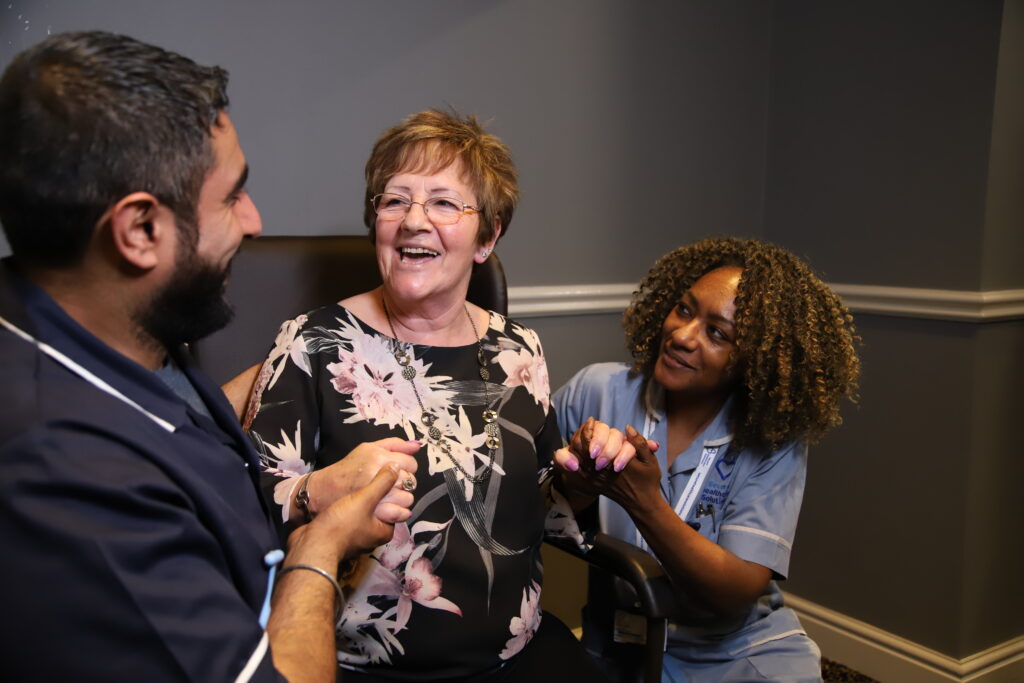
When driving with Parkinson’s, family, friends, and carers play an important role in keeping your loved one safe for as long as possible. Carers can notice smaller, unnoticeable things about the person with Parkinson’s, such as a slower reaction, hesitation in driving, or increased fatigue after a short drive. Gently raising these observations and promptly starting a conversation about them with a GP can help a person with Parkinson’s.
Practical support can build up confidence and make the patient calm and reassured:
- Help with completing DVLA forms
- Keeping track of license renewal dates
- Compassionate support at home
- Being a familiar companion as a passenger
Specialist Parkinson’s Care in the UK from Secure Healthcare Solutions
Living well with Parkinson’s is not a single decision. It’s about having the right support through daily life, someone who understands the tremors, the freezing episodes, the medication timing, and the emotional weight that comes with a progressive condition. That’s where dedicated, person-centred care becomes invaluable.
Secure Healthcare Solutions provides experienced, compassionate Parkinson’s Care in the UK, tailored to each individual’s needs, from help with mobility and daily routines to companionship, medication support and respite for family carers. Whether driving remains part of someone’s life or not, the right care team can help preserve independence, dignity and quality of life at every stage of the Parkinson’s journey.
References
- https://www.parkinsons.org.uk/information/travel-transport-mobility/informing-DVLA-DVA-licensing-agency
- https://www.gov.uk/parkinsons-disease-and-driving
- https://www.gov.uk/government/publications/pk1-online-confidential-medical-information