Loading Jobs...

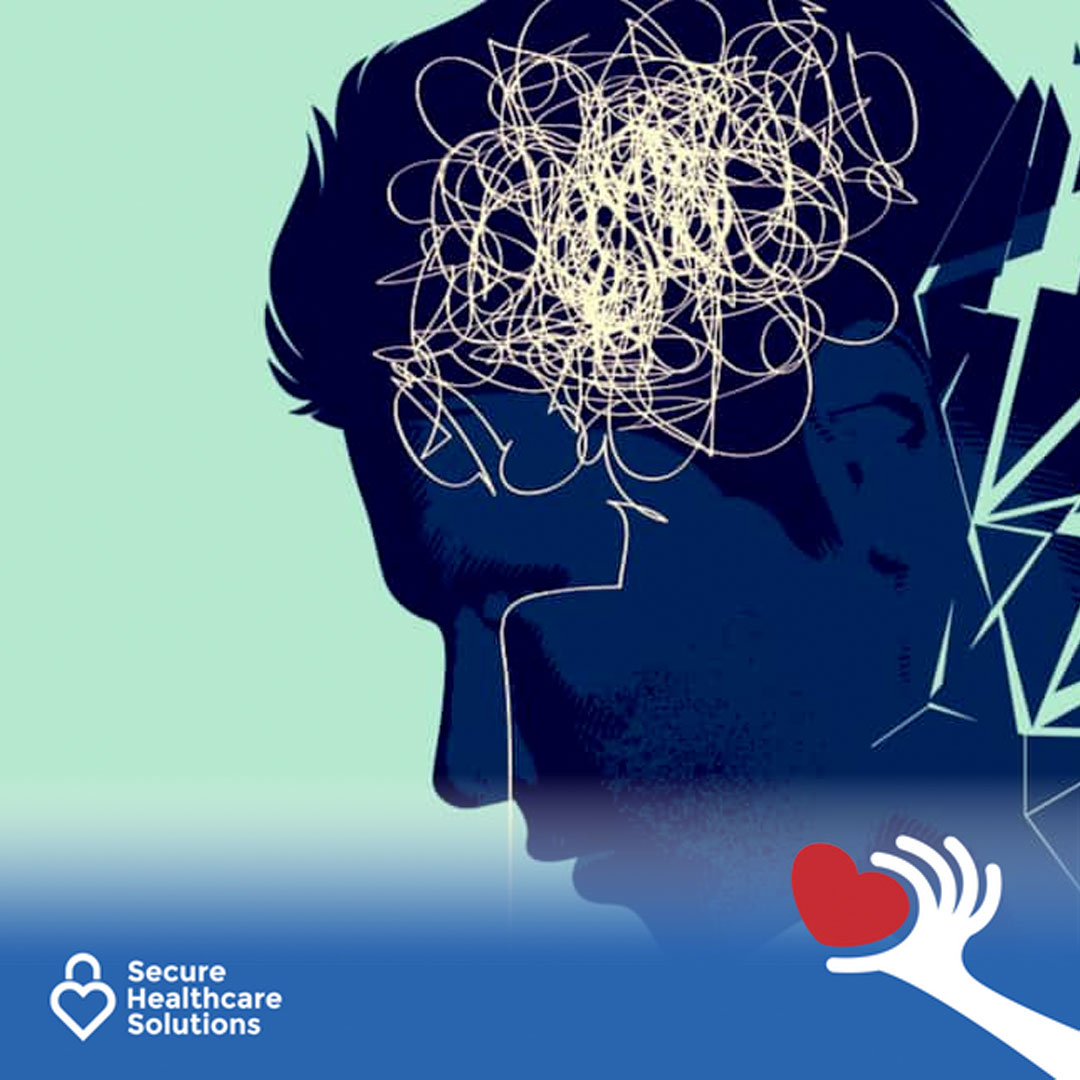
Struggling with depression? Here’s some advice

Thankfully, depression is a mental illness that is becoming more easily talked about, with more and more celebrities – from Stephen Fry to Stormzy – coming forward to admit that they have struggled with it. This open conversation is allowing more and more people the confidence to seek help and better manage their depression.

If you’re unsure about what depression is, the Mental Health Foundation describes it as “a common mental disorder that causes people to experience depressed mood, loss of interest or pleasure, feelings of guilt or low self-worth, disturbed sleep or appetite, low energy, and poor concentration”.

Their website adds that depression is the predominant mental health problem worldwide, followed by anxiety, schizophrenia and bipolar disorder, and in 2014 19.7% of people in the UK aged 16 and over showed symptoms of anxiety or depression – a 1.5% increase from 2013. This percentage was higher among females (22.5%) than males (16.8%).

So how can you tell if you have depression? Most of us get sad or lonely from time to time, but it’s when these feelings begin to rule your life and cause physical as well as psychological symptoms that last for long periods of time that this could be classed as depression. It is at this point where it could be worth getting some help; it could even save your life.

Web MD say that recognising the symptoms of depression is key to tackling it. They say that “unfortunately, about half the people who have depression never get it diagnosed or treated.”

According to their website, symptoms of depression can include:

• Trouble concentrating, remembering details, and making decisions
• Fatigue
• Feelings of guilt, worthlessness, and helplessness
• Pessimism and hopelessness
• Insomnia, early-morning wakefulness, or sleeping too much
• Irritability
• Restlessness
• Loss of interest in things once pleasurable, including sex
• Overeating, or appetite loss
• Aches, pains, headaches, or cramps that won’t go away
• Digestive problems that don’t get better, even with treatment
• Persistent sad, anxious, or “empty” feelings
• Suicidal thoughts or attempts (1 in every 10 people with depression result to this)

If you’ve acknowledged you might have depression, a good place to start is with a visit to your GP in order to get a medical diagnosis and some professional help. Your GP can recommend treatments for depression including psychological therapies like CBT or counselling, or antidepressants. Additionally, the NHS have some extra tips that could help you deal with your depression:

1. Socialising can improve your mood and keeping in touch with friends and family means you’ll have someone to talk to when you feel low.
2. Take up some form of exercise. There’s evidence that exercise can help lift your mood. If you haven’t exercised for a while, start gently by walking for 20 minutes every day.
3. Don’t avoid the things you find difficult. When people feel low or anxious, they sometimes avoid talking to other people. Some people can lose their confidence in going out, driving or travelling. If this starts to happen, facing up to these situations will help them become easier.
4. Don’t drink too much alcohol. For some people, alcohol can become a problem. You may drink more than usual as a way of coping with or hiding your emotions, or just to fill time. But alcohol won’t help you solve your problems and could also make you feel more depressed.
5. Try to eat a healthy diet. Some people don’t feel like eating when they’re depressed and are at risk of becoming underweight. Others find comfort in food and can put on excess weight. Antidepressants can also affect your appetite, so if you’re concerned about weight loss, weight gain or how antidepressants are affecting your appetite, talk to your GP.
6. Have a routine. When people feel down, they can get into poor sleep patterns, staying up late and sleeping during the day. Try to get up at your normal time and stick to your routine as much as possible. Not having a routine can affect your eating. Try to carry on cooking and eating regular meals.
7. If you start to feel that your life isn’t worth living or about harming yourself, get help straight away. You can contact Samaritans on 116 123 for 24-hour confidential, non-judgemental emotional support. You could call your GP and ask for an emergency appointment or you could call 111 out of hours – they will help you find the support and help you need.

How to avoid being scammed

You hear a lot about scams on the news and through everyday conversations. About how older and often more vulnerable people are targeted in particular. There are some cases where people have lost their life savings to what they have thought were worthy, legal and just causes only to find out that they have been deceived and that the money they had worked so hard for is no longer around to pay for their retirement.

According to a BBC investigation back in 2018, fraudsters scammed nearly 49,000 older people across the UK. However, the true number of elderly victims is likely to be in the millions.

It’s a scary thought, especially if you are concerned of a loved one – perhaps a parent – falling into such a trap. But how can you spot the signs of a scam?

Age UK define scams to be a way of cheating people out of their money. “A scammer may try to approach you on your doorstep, by post, over the phone or online. They’ll often pretend to be someone they’re not, or make misleading offers of services or investments. New digital ways of communicating have led to an increasing number of scams – and more people being tricked by them.”

The Money Advice Service explains that knowing what to be on the lookout for when it comes to scams is one of the best ways to protect yourself.

Here are some ways, according to their website, of how you can recognise a scam:

• If you have received any kind of contact, but particularly a phone call, out of the blue, it is best to avoid it. Since January 2019, there has been a ban on cold calling about pensions. This means you should not be contacted by any company about your pension unless you’ve asked them to.
• If you get an email, expand the pane at the top of the message and see exactly who it has come from. If it is a scam, the email address the message has come from will be filled in with random numbers, or be misspelled.If it sounds too good to be true, it usually is.
• Personal details, PIN codes and passwords. These are things no legitimate company will ask you for.
• If you are pushed into making a decision on the spot, be suspicious. Scammers don’t want you to have time to think about it.
• Random competitions, particularly if you don’t remember entering them, should ring alarm bells.

But what happens if you’ve already fallen victim to a scam? If you’ve already given money to a scam, you shouldn’t feel embarrassed. Scammers are usually very good at what they do and can sound very convincing.

Age UK say that the first thing you should do is get in touch with your bank so they can cancel any cards or freeze your account. Then contact Action Fraud (0300 123 2040). The information you provide could help authorities track down the scammer, making them pay for their crime and protecting others. You might even get some money back.

“If you paid for something by credit card in a transaction that turns out to be fraudulent, your card provider may offer protection. If you have household insurance, your policy may also provide cover in some circumstances. If the scammer is traced, it may be possible to prosecute them and recover your money.”

If you are concerned that someone you know is being, or has been, targeted by scammers, Independent Age suggest you should try to speak to them about it. “It’s not uncommon for people to feel ashamed or embarrassed if they have fallen victim to a scam, so reassure them that this isn’t their fault and that scammers use devious tactics anyone could be taken in by.”

They add that whether or not the person wants to report a scam, they could talk to Victim Support (0808 168 9111), a charity providing practical and emotional support to people affected by crime. If you’re concerned that someone you know might be at risk of financial abuse – for example, a person with dementia who you’re caring for – discuss your concerns with your local council’s adult social services department.

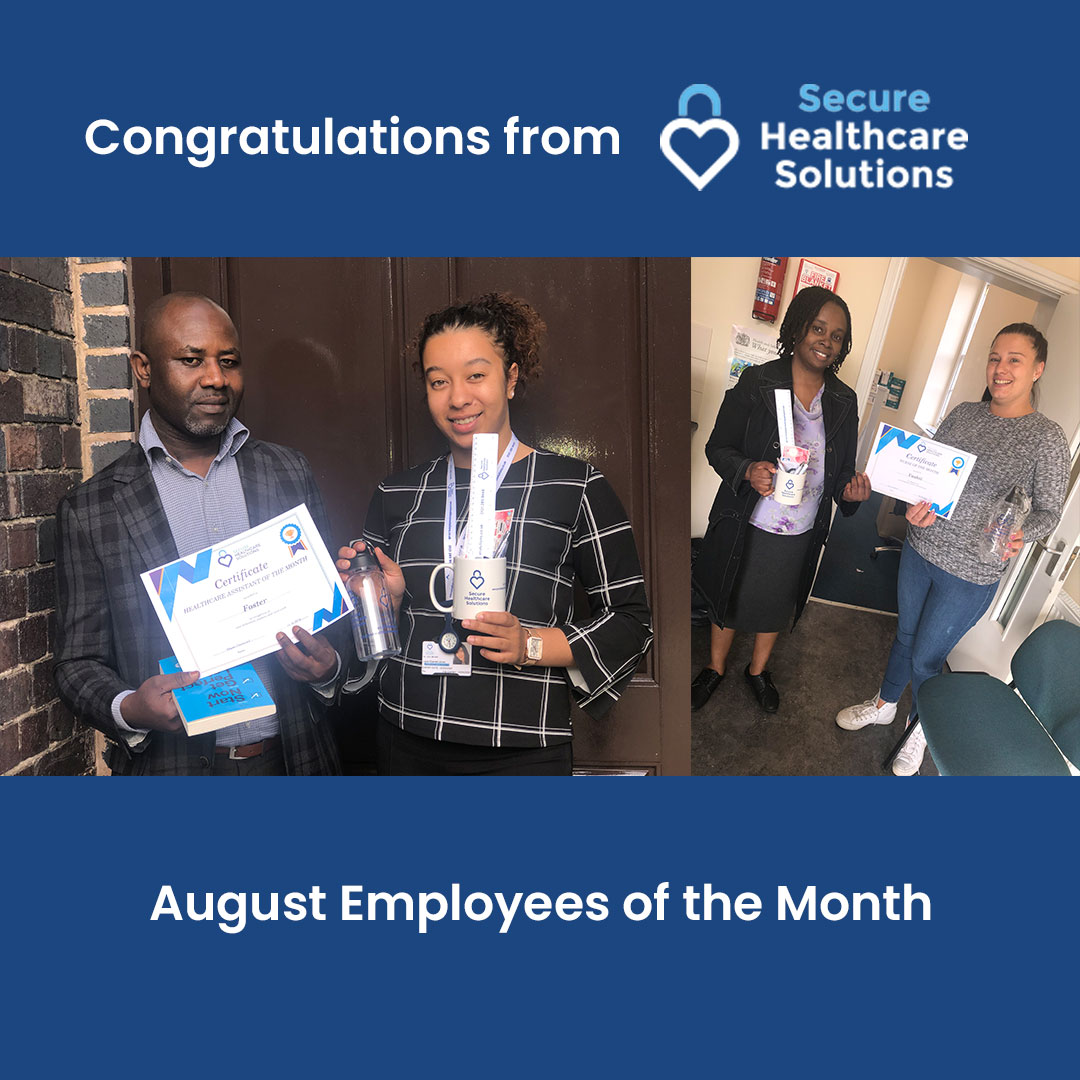
Employee of the month – August

Autumn is coming which can only mean one thing. Summer has come to an end. With summer coming to a close there’s no more Ice cream vans to run out too before they drive away, the warms days are becoming no existent and grandparents telling you to get a choc ice out the fridge rather than having an ice cream from the ice cream van. With one door closing another door opens and with winter coming it is the season for big snuggly jumpers, cuddling up on the sofa to watch films about Halloween and Christmas and drinking big cups of hot chocolate.

With Christmas coming Secure Healthcare Solutions have a many opportunities arising. We have vacancies for female domiciliary workers; all we require you to have is a driving License and access to a car. There are opportunities to join our temporary staffing agency, you only need 6 months paid experience within the UK in the past two years and just to us expanding we are recruiting over the West midlands and the South West. Give us a call on 0121 285 9449 and our recruitment team can advise you on the best route for you whether you’re a healthcare assistant, support worker, registered nurses, Allied Healthcare Professionals and NHS candidates. Every little helps and with Christmas fast approaching why not sign up with the agency to help you save up that little extra to put away for Christmas presents.

Our temporary agency employees always go above and beyond to amaze our clients and ourselves with the service they provide on behalf of Secure Healthcare Solutions and the dedication they have towards their work ethos. Our nurse of the month has been an exceptional agency staff member of ours who has excelled in her career as an NHS nurse by working through us. She has had excellent feedback given back from all wards she has worked on and is always positive in any scenario, Congratulations Vashti. The healthcare assistant of the month has been hardworking since he has joined the agency and is always willing to help us urgently as well as with advance bookings; he is a credit to us and a well-respected member of the Secure Healthcare Family. Congratulations Foster.

6 tips for if you struggle with anxiety

If you yourself do not struggle with anxiety, you’re likely to know someone (or several people) who does. According to the Anxiety and Depression Association of America (ADAA), “anxiety disorders are the most common mental illness in the U.S., affecting 40 million adults in the United States age 18 and older, or 18.1% of the population every year”. Anxiety can affect anyone – from carers, to doctors, to nurses and patients – although women are twice as likely to be affected as men.

It’s difficult to determine whether the number of those affected by anxiety is rising or whether we are all just far more open about talking about it. However, the ADAA also say that researchers have found that using social media obsessively can cause anxiety, depression, attention deficit hyperactivity disorder (ADHD), impulsive disorder, problems with mental functioning, paranoia, and loneliness. With social media use increasing daily across all age groups, this sparks fear for our anxious minds and raises questions about how we will all cope in the future.

So what exactly is anxiety? The NHS website explains that anxiety is a feeling of unease, such as worry or fear, that can be mild or severe. “Everyone has feelings of anxiety at some point in their life. For example, you may feel worried and anxious about sitting an exam, or having a medical test or job interview. During times like these, feeling anxious can be perfectly normal. But some people find it hard to control their worries. Their feelings of anxiety are more constant and can often affect their daily lives.”

It is when feelings of anxiety begin to affect your daily life and begin to cause you distress that you should go to talk to your GP about it and get some professional help. Symptoms for anxiety can include feeling restless or worried, having trouble concentrating or sleeping and dizziness or heart palpitations.

If you are hoping to develop ways to manage anxiety – whether you’ve been to see your GP yet or not – here are some tips that could help you:

1. Talk it out

Mind the Mental Health Charity suggest that talking to someone you trust about what’s making you anxious could be a relief. “It may be that just having someone listen to you and show they care can help in itself. If you aren’t able to open up to someone close to you, the Samaritans and Anxiety UK both run helplines that you can call to talk to someone.”

2. Breathe through it

The NHS advise that if you are feeling anxious, the best thing is not to fight it. “Stay where you are and simply feel the panic without trying to distract yourself. Place the palm of your hand on your stomach and breathe slowly and deeply. The goal is to help the mind get used to coping with panic, which takes the fear of fear away.”

3. Move more

When coping with anxiety, WebMD say that if you’re feeling anxious, you should try exercising. “Exercise is an important part of physical and mental health. It can ease your feelings of anxiety and boost your sense of well-being. Shoot for three to five 30-minute workout sessions a week. Be sure to choose exercises you enjoy so you look forward to them.”

4. Get a good night’s sleep

WebMD also say that if we are feeling anxious we should pay attention to our sleep. “Both quality and quantity are important for good sleep. Doctors recommend an average of 8 hours of shut-eye a night. If anxiety is making it hard for you to fall asleep, create a routine to help.”

5. Cut down on caffeine and alcohol

Another one from WebMD! “Both caffeine, which is an “upper,” and alcohol, which is a “downer,” can make anxiety kick into overdrive. Cut back or avoid them if you can. Remember, coffee and soda aren’t the only things with caffeine.” Watch out also for diet pills, tea, chocolate and some headache medicines.

6. Try to accept your anxious thoughts

The Priory Group suggest that a good way of coping with anxiety is to sit with it. They say that “anxiety, although uncomfortable, is a normal emotion and no matter how much you want to get rid of it, we all feel anxious from time to time. Accepting anxiety, can be just like accepting that sometimes we feel angry, or sometimes we feel sad and sometimes we feel happy, and just like those other emotions, anxiety will pass. However, if your anxiety is long term and affecting your day-to-day life you shouldn’t just accept it in order to feel better, you should seek support.”

What is osteoporosis and how can I prevent it?

Often incorrectly described at brittle bone disease, osteoporosis is something that many ageing people will have heard of and will likely be fearful of. Osteoporosis affects over 3 million people in the UK with more than 500,000 people receive hospital treatment for fragility fractures every year as a result of the disease.

Although ageing can lead to osteoporosis, there are ways that you can prevent the disease, and with the help of the NHS’s website here we will explain how.

But firstly, what is osteoporosis?

According to the NHS, “osteoporosis is a health condition that weakens bones, making them fragile and more likely to break. It develops slowly over several years and is often only diagnosed when a fall or sudden impact causes a bone to break (fracture)”.

The most common injuries associated with osteoporosis are a broken wrist, hip or spinal bones.
However, breaks can also happen in other bones, such as in the arm or pelvis.

What causes of osteoporosis?

The NHS explains: “Losing bone is a normal part of ageing, but some people lose bone much faster than normal. This can lead to osteoporosis and an increased risk of broken bones.

“Women also lose bone rapidly in the first few years after the menopause. Women are more at risk of osteoporosis than men, particularly if the menopause begins early (before the age of 45) or they’ve had their ovaries removed.”

Osteoporosis can also affect men, younger women and children and there are other factors that can also increase the risk of developing osteoporosis too. These include taking high-dose steroid tablets, a family history of osteoporosis, having or having had an eating disorder such as anorexia or bulimia, not exercising regularly and heavy drinking and smoking.

How can we prevent osteoporosis?

Getting older is hard enough. You are more likely to develop diseases and certain health conditions, you may become unable to get around and do the things you used to do and you may feel isolated and lonely because of this. It is therefore a good idea to work towards prevention of osteoporosis before it’s too late to make life as an older adult a little easier.

Exercising regularly can go a long way to preventing osteoporosis. The NHS recommends that adults aged 19 to 64 should do at least 2 hours and 30 minutes of moderate-intensity aerobic activity, such as cycling or fast walking, every week. As well as aerobic exercise, adults aged 19 to 64 should also do muscle-strengthening activities on 2 or more days a week by working all the major muscle groups, including the legs, hips, back, abdomen, chest, arms and shoulders.

Weight-bearing exercise and resistance exercise are particularly important for improving bone density and helping to prevent osteoporosis. People over the age of 60 can also benefit from regular weight-bearing exercise. This can include brisk walking, keep-fit classes or a game of tennis.

As well as exercising regularly, the NHS says that “eating a healthy, balanced diet is recommended for everyone. It can help prevent many serious health conditions, including heart disease, diabetes and many forms of cancer, as well as osteoporosis. Calcium is important for maintaining strong bones. Adults need 700mg a day, which you should be able to get from your daily diet.”

If you would like to get more calcium into your diet, try eating more leafy green vegetables, dried fruit, tofu and yoghurt.

The NHS adds that “vitamin D is important for healthy bones and teeth because it helps your body absorb calcium. All adults should consume 10 micrograms of vitamin D a day.”

To get more vitamin D into your diet, try eating more oily fish such as salmon, sardines, herring and mackerel, red meat, liver, egg yolks and fortified foods such as most fat spreads and some breakfast cereals.

If you are finding it difficult to get enough vitamin D from foods alone, you could consider taking a daily supplement, but consult your GP first.

Lastly, to give yourself the best chance of avoiding osteoporosis, you should consider quitting smoking, as smoking is associated with an increased risk of osteoporosis and limiting your alcohol intake to no more than 14 units of alcohol a week.

July Employee of the month

The summer holidays have flown by and just like the typical British weather, where the sun has come and gone our employee of the months have done the same thing. They have come to work and have shown how skilled, productive and their passion for healthcare, then jetted off as a reward to themselves for all the hard work they have done.

The summer has been an exciting month for Secure Healthcare Solutions! We have had training provided by Secure Training Services which has enabled the development of skills for not just our candidates but for external candidates, homes and clients as well. We have training running every month which is on offer to you, why not give us a call and find out how you can take part in one of our training days or find out how we can benefit you.

In addition to this, we have launched Secure Cleaning Services! Do you have a busy lifestyle and don’t have time to clean yourself, then why not call us today to find out how Secure Cleaning Services can help you.

With our candidates being as busy as we have this month it has been hard to schedule our candidates to come in. We have been so overwhelmed with the positive feedback we have received over the summer for our candidates and these are the two had feedback that stood out. Our nurse of the month has been with us for years and has always been a highly respected member of the Secure Healthcare Solutions Family. She has always had extremely positive feedback and has always had a strong relationship with any client she works for, being such a humble person who is a credit to the team, we couldn’t be prouder, congratulations Tilly. Our carer of the month is a new candidate of ours who has hit the ground running and jumped into the full swing of things. She has had incredible feedback since she has been with us and has shown her hard work and dedication to each and every client she has worked for, so congratulations to Sophie!

We hope everyone has had a lovely summer and are ready for the winter months. With Christmas coming soon we all need a little extra money in our pockets, so call Secure Healthcare Solutions today on 0121 285 9449 and find out how you can make a little extra money.

How to look after your mental health when you work in care

Care workers and nurses need more support to handle the emotional impact of their jobs. According to an article published on Vice, depression is over twice as prevalent in nurses as it is in the general population—18 percent versus nine percent (in the US), and nurses with depression are not only likely to suffer themselves, but their illness may have an impact on their coworkers and potentially the quality of care they provide. In a study from 2014, workers in the healthcare industry had higher ratios for mood disorders, anxiety disorders, sleep disorders and psychiatric disorders. Among workers in healthcare industry, females had higher prevalence of psychiatric disorders than males.

There are multiple reasons as to what makes care work so emotionally taxing, including working conditions associated with the health and well-being of visiting home care workers, being unfairly paid, having minimal benefits, emotional labour, lack organisational support, lack of control over work, and peer pressure. Having to witness and care for some people through to the end of their lives can also be hard on the strongest of people.

In an article in the Guardian, Paul Case a mental health and housing support worker living in Edinburgh, wrote: “It’s incredible how much emotional labour social care workers take on but rarely discuss. We work intimately, often alone, with some of the most vulnerable people in our society. We see, hear and intervene in situations that can be distressing. We witness the realities of abuse, poverty and addiction. Processing the emotional impact of our work takes time and effort.

“The consequences of not having the time and space to adequately perform our emotional labour can be disastrous. As a recovery worker for a mental health charity, I’ve seen staff break down crying, signed off due to stress or simply leave halfway through a shift, unable to cope. A high staff turnover, an over-reliance on agency staff and inconsistent support all appear to be near-endemic in social care.”

We all need a break, no matter how much we love our jobs. If you are not at 100% as a care worker, you cannot adequately care for those in need. Nurse.org say that not looking after your mental health can result in distraction, and when you’re distracted -whether work-related or not- you should promptly tackle the situation. It can also affect physical health, often resulting in heart disease, high blood pressure, a weakened immune system, asthma, obesity, gastronomical problems and premature death. The World Health Organisation (WHO) states, “there is no health without mental health.” Poor mental health is a risk factor for chronic physical ailments. When your mental health begins to affect your physical health, you should definitely use a mental health day to care for yourself.

Here are Mind the Charity’s top tips for staying well at work:

1. Reclaim your lunch break: Why not make the most of that precious hour – or half hour – by trying some of these suggestions…
2. Hold a group activity: If there’s a green space near your workplace why not organise a game of rounders or football, hold a guerrilla gardening session, or a group walk? Take time to enjoy the outdoors and get re-energised for an afternoon of productive work.
3. Take up a challenge: Local sponsored walks or marathons are a great way to keep active. Sign with your colleagues and train together during lunch breaks. Participating as part of a team can give a communal sense of achievement when you complete the challenge.
4. When you’re at work, working hard to complete a task, music can also help eliminate distractions around you. By blocking out the noise of your fellow workers, machinery or bleeping phones you can focus easier on the task at hand.
5. Create clear boundaries between work and home: Try not to let work spill over into your personal life. If you need to bring work home, designate a separate area for work and stick to it, you’ll find it much easier to then close the door on work.
6. Use the time on your commute home to wind down from work: Read a book or listen to your music to set aside some time to yourself. Maybe try cycling part of your journey or getting off a stop early to take a shortcut through a park or quiet streets. These little actions can really help you to switch off.
7. Ask for help: If you feel your workload is spiralling out of control, take opportunity to discuss it with your manager or supervisor. If you can’t resolve the problem of unrealistic goals, organisation problems or deadlines in this way, talk to your personnel department, trade union representative or other relevant members of staff.

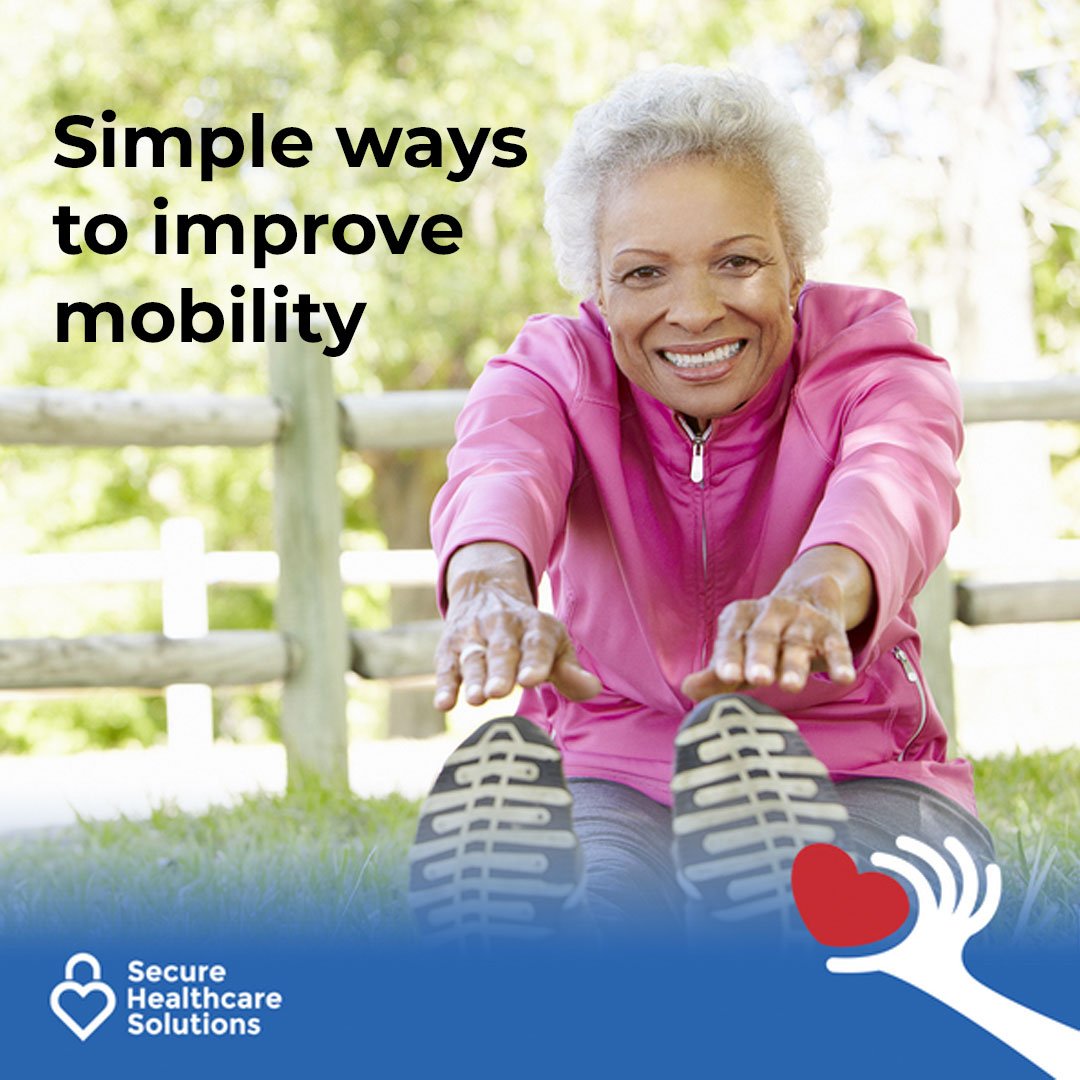
The benefits of exercise for the elderly

What do you think of when you picture older people in care? Are they seated? Watching TV? Probably.

Despite what our preconceived ideas are of elderly people, the truth is that physical activity and exercise is important for people of all ages. If someone has an age-related health problem, they may be put off exercise, but staying active may actually be the key to maintaining health and independence for them.

According to the NHS, many adults aged 65 and over spend, on average, 10 hours or more each day sitting or lying down, making them the most sedentary age group. This inactivity makes them at risk to higher rates of falls, obesity, heart disease and early death compared with the general population.

Why is exercise important?

If you do not stay active, even into old age, all the things you’ve always enjoyed doing and taken for granted may start to become harder. There’s evidence that people who remain active have a lower risk of heart disease, stroke, type 2 diabetes, some cancers, depression and dementia.

According to the Care Workers Charity, exercise can also improve the strength and tone of your muscles, meaning you’re less likely to have an accident or a fall and injure yourself. As well as these benefits, regular exercise can help our ability to continue with everyday activities, can keep your brain functioning and can affect your sense of wellbeing and self-esteem.

Importantly for older people, exercise can help sustain social connections. Whether that’s an exercise class at the local leisure centre or a regular walk in the park with a friend, reinforcing social bonds is a vital component of good health in later years.

Studies have shown that regular exercise can add 3-5 years to life expectancy figures, and not only does it add years but improves the quality of those years.

How can I get started?

The NHS adds that if you’ve not done much physical activity for a while, and are part of the older population, you may want to get the all-clear from a GP before starting.

Aim to do about 30 minutes of moderate exercise a day, along with some muscle strengthening activities. During moderate exercise, your breathing and heart rate are faster and you feel warmer.

If you’re just getting started, take it easy at first and gradually increase how much activity you do to build up your fitness. The most important thing is to spend as little time as possible being inactive.

If you’re already regularly active, you could try doing 75 minutes of vigorous exercise spread over the week. This is the type of activity where your breathing is much deeper and rapid, and your heart rate increases quickly. Or you could do a combination of moderate and vigorous activity.

If you struggle to exercise on your feet due to a long-term illness, it’s even more important to try to exercise. Exercise can improve your mood and is really beneficial for your mental health. Chat to a professional about what the best sort of exercise is for you.

Chair exercises

For elderly people, these NHS recommended gentle sitting exercises can help to improve your mobility and prevent falls, and can even be done at home.

For these exercises, choose a solid, stable chair that doesn’t have wheels. You should be able to sit with your feet flat on the floor and knees bent at right angles. Avoid chairs with arms, as these will restrict your movement.

Chest stretch

• Sit upright and away from the back of the chair. Pull your shoulders back and down. Extend your arms out to the side.
• Gently push your chest forward and up until you feel a stretch across your chest.
• Hold for 5 to 10 seconds and repeat 5 times.

Upper-body twist

• Sit upright with your feet flat on the floor, cross your arms and reach for your shoulders.
• Without moving your hips, turn your upper body to the left as far as is comfortable. Hold for 5 seconds.
• Repeat on the right side.
• Do 5 times on each side.

Hip marching

• Sit upright and do not lean on the back of the chair. Hold on to the sides of the chair.
• Lift your left leg with your knee bent as far as is comfortable. Place your foot down with control.
• Repeat with the opposite leg.
• Do 5 lifts with each leg.

Are supermarket discounts enough to keep nurses in the NHS?

In an article published on ITV, it said that nurses have missed out of the UK Government’s latest announcement that it will be giving two million public sector workers a pay rise. Instead, nurses have the option to be offered supermarket discounts and cheap gym membership in an effort to persuade workers to stay in the NHS. But is this enough?

Speaking to the Telegraph, Simon Stevens, the head of the UK’s health service, will call for the wider rollout of such schemes which have given staff savings of up to £1,000 a year on their shopping. The plans will see nurses offered access to promotions and discounts in a bid to encourage staff loyalty.

It has been revealed in the London Economic that many nurses are quitting the NHS to work in Lidl because pay, hours and benefits better. With a shortage of 40,000 nurses across the UK, the NHS continues to face a drain on staffing as nurses quit, yet they have not been announced as deserving of a pay rise in 2019.

Last year NHS leaders warned that the health service is now so understaffed that patient safety is being put at risk. Chris Hopson, NHS Providers’ chief executive said in the article: “Years of pay restraint and stressful working conditions are taking their toll”.

The Telepgraph adds that health officials say a similar NHS discount scheme in Birmingham – which gave staff access to discounts from 700 retailers, including Sainsbury, Tesco, Boots, Morrisons and B&Q – has helped the trust to keep its staff, at a time when others are losing workers. Sandwell and West Birmingham Hospitals NHS Trust has cut turnover of nursing staff by two per cent since starting the scheme. The trust says its discount website, which has more than 2,300 users, helps staff save up to £1,000 a year.

It has been announced that two million public sector workers including police officers and teachers but excluding nurses are to receive above-inflation pay increases, the biggest for six years. Police officers will receive a 2.5% rise while the salaries of teachers and other school staff will increase by 2.75%. Soldiers will get a 2.9% increase and dentists and consultants will get 2.5%, according to the Times.

Most public sector workers’ pay increase will be higher than the 2% rate of inflation. Many have been forced to accept below-inflation pay increases during the government’s austerity drive of the past decade, while rents have risen by more than the cost of living.

A recent report warned that London and the southern regions of England are facing a shortage of teachers, nurses and police officers as rising rents make housing in large parts of the UK unaffordable for key public sector workers.

The report, published by PricewaterhouseCoopers, warned that the high cost of rental housing in London and in the South East could contribute to a shortage of nurses in the area. It found that rental costs in London accounted for 39% of nurses’ and midwives’ income and noted that a ratio of 30% was the conventional benchmark that is considered affordable.

So are discounts enough to keep nurses in the NHS? Ultimately shopping budgets and gym memberships are only a couple of pieces to the puzzle. If nurses can’t pay their rents and their bills, we are going to see more and more of them move to other jobs with better benefits and pay.

However, it is a start.

Advice for young carers

The BBC has estimated that there are roughly 700,000 young carers in the UK. A young carer is a young person looking after a family member who is not well, or helping them by looking after the other members of the family while they can’t. The average age of a young carer is scarily only 12 years old.

Young carers often do more chores than other children would normally have to do. On top of providing emotional support to the person they are caring for, they may also have to learn how to nurse them or look after their personal needs like bathing and dressing. Such tasks can be difficult for grown adults to deal with, let alone young children.

Here’s some advice from the NHS website for if you’re struggling as a young carer:

Where can I turn for help?

1. Your teachers could be a good place to start when reaching out for support if you are a young carer. They could point you in the direction of getting some help from appropriate authorities.

2. A social worker from your local council can arrange to pay you a visit and offer you support if you or your parents request this. Social workers may also be asked to help a young carer’s family if there are problems.

3. Childline is a free and confidential telephone helpline for children on 0800 11 11. You can talk to someone there who may be able to give you advice and get you help and they won’t tell anyone that you have called.

4. If you’re worried about your health, or the health of the person you care for, speak to a doctor or GP.

Local mental health nurses can also offer emotional support and advice about mental health conditions. If your parent has a “community psychiatric nurse”, you can talk to the nurse about your parent’s illness and how you can help your parent cope.

5. You could also call all the Carers Direct helpline on 0300 123 1053.

What happens if I miss too much school?

You may find you have to miss school to care for someone, but missing too much school can affect your whole future. It can mean you fall behind in work, fail exams and can affect your chances of getting into university or finding work in the future.

If you’re missing lessons to help look after someone at home, or struggling to get your work in on time, it’s important to talk to a teacher about what’s going on at home so that they can understand what is happening and give you more help. You might not want your school to know you’re caring for someone, but if they don’t know about your situation it can be difficult for teachers to understand why you are falling behind. Try to get help as quickly as possible so the situation doesn’t go on for a long time.

A GP, nurse, social worker or another person whose job is to help the person you look after should be able to organise more support at home to help you concentrate on school or college.

How do I maintain a social life?

Young carers can miss out on playing and spending time with friends and classmates. You may feel isolated from your friends because you don’t have as much free time as them, because you’re often thinking about the person you look after or because you may be worried they will bully you if they find out you are a young carer.

Local young carers project or a carers centre may be able to help maintain your social life. Meeting up with other young carers is a great way to make new friends, have some fun and share some of your worries with people in similar situations to your own. Young carers projects may offer evening clubs, weekends away, days out and even holidays, as well as friendly advice and information for you and for your family.

Here are some organisations to look at:

1. The Children’s Society runs services for young carers in many areas.

2. KIDS is an organisation specially for carers under the age of 18.

3. Action for Children can put you in touch with other young carers. It also has free places for young carers at its residential activity camps.

What do I do about money?

Most young children do not have to worry about money, but when you are a young carer your loved one may not be able to take control of finances on your behalf.

Citizens Advice has information on money, benefits and your rights. The National Careers Service has a helpline, webchat and email service about education and careers for 13 to 19 year olds. Support is also available up to the age of 25 for those who have learning difficulties or disabilities.